
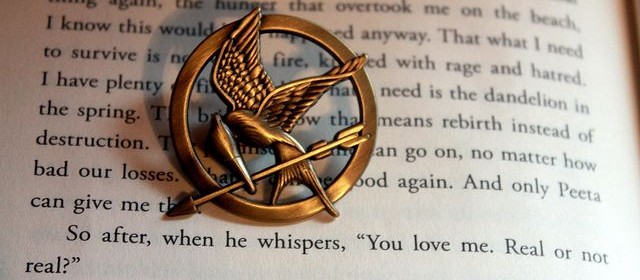
[Photo: Suzanne Collins, Mockingjay (Scholastic, 2010)]
We live in interesting times for writers. The world constantly bombards us with pressure to cut corners by using AI to “make things easier” for us. Yet all it is really asking us, and readers, to do is downgrade quality. What passes for artificial intelligence foisted upon us daily is really nothing more than a glorified autocorrect system that guesses and regurgitates often incorrect and/or incomplete information when it is not downright dangerous.
Yet so many people are falling for the AI promise of “easy” that even some of the world’s most prestigious book competitions are having to verify whether, or to what extent, authors utilized AI. Professional writers live with the reality that they might be fully replaced by AI. For those of us who still read newspapers, it is painfully obvious which publications have started replacing actual human reporters with AI slop.
It all brings to mind a quote from the fictional character Peeta Mellark in the Hunger Games series, written by the very human Suzanne Collins. After being tortured and brainwashed, the recovering Peeta has to ask, “Real or not real?” to separate what is actually happening from the false memories implanted in his mind.
AI even makes it hard for writers to decipher “real or not real” engagement with readers. Social media bots and email scams are so prevalent that it feels like the only way to ensure real engagement is through in-person interactions such as at book festivals and book talks.
No doubt there will be corners of the publishing world that will fully embrace AI-written, mass produced materials as long as they are profitable, but I am heartened by the public’s continued appetite for material written by real authors. Look no further than the boost given to Homer’s The Odyssey and John Steinbeck’s East of Eden thanks to hit filmed versions released in 2026. Readers cannot engage directly with the long-gone writers of these classic works, but they will always be able to engage with their words.
The Family Behind the Girl Scouts is a scholarly book published by a small press that so far is getting good reviews. It is also an authentic work written by a real author based on the real lives of long-gone human beings who left behind archives full of their own words. Readers who engage the text will at least know they are not engaging with bots. In this day and age, that is about as real as it gets.


Leave a comment