Version 1.0.0

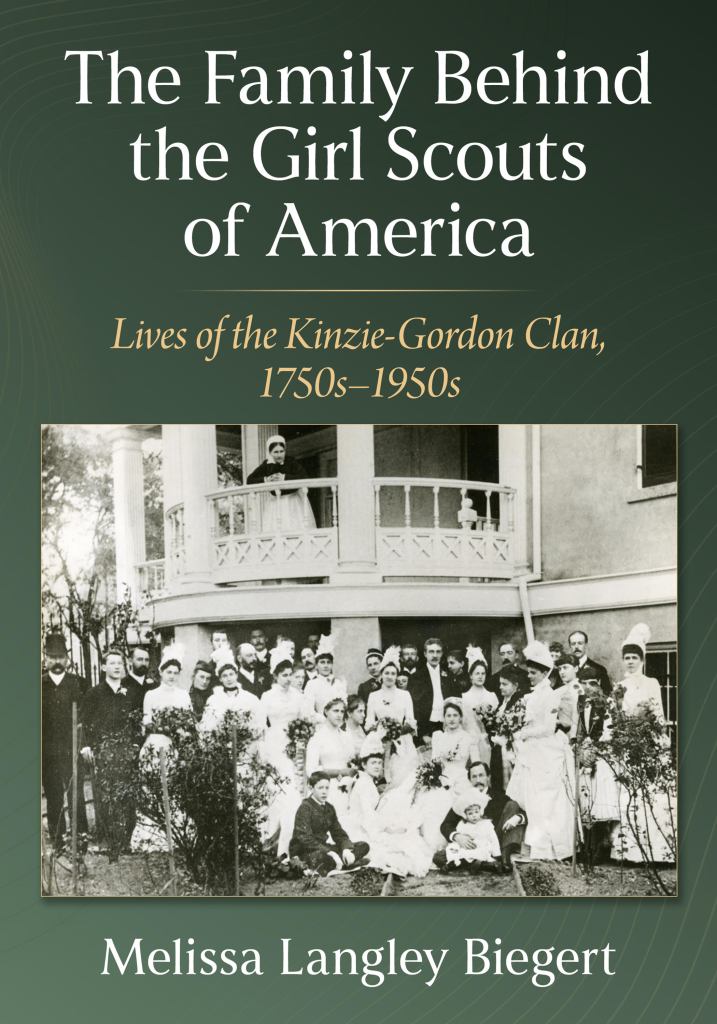
With the book dropping this week I’d like to draw attention to the cover image and why we chose it to set the tone for the book. The image is a group photo of all family and guests in attendance at when Juliette “Daisy” Gordon married William “Willie” Low in 1886. I have been fascinated by this image ever since I first encountered it at the Juliette Gordon Low Birthplace Museum in Savannah. Besides the photograph commemorating a crucial moment in Juliette Low’s life and including most of the people in her generation who are discussed in the book, what captivated my attention was the presence of the servant on the balcony above the guests. The servant is identified as “nurse” Valentine Breton, presumably the caretaker of some of the youngest children in the family. The juxtaposition of the servant and family infers so much about Gilded Age society as well as the status and evolution of the Gordon clan at that time. They were the Georgia version of the Astors and Vanderbilts. I encourage readers to examine the image and think about what questions it might raise about the lives of those it depicts.

2 responses to “Anatomy of a Cover Photo”

  1. Margaret Seiler Avatar

    Oh my goodness, I think my mother (and her older sister and brother, who knew their Aunt Daisy) would be amused at this: “the Georgia version of the Astors and Vanderbilts.” But there is some truth to it.

    Like

  2. I’ve long wondered why our organization/movement hasn’t come under fire for this very reason. I’ve been a Girl Scout since Brownies (66 years), and a Troop Leader (and as an Assistant Leader my last year as a girl member). 52 of those consecutive years as co-leader with my husband.

    We’ve seen girls blossom and grow: from the Cadette who learned to read in our troop to the 13 year member of our troop who aced her first semester stage-craft exams in college because she learned how to tie all but two of the required knots, and many of the skills, in our troop. One girl told us that she spent her college freshman year answering the question, “Where did you learn how to do that? Her answer: Girl Scouts Girl Scouts, Girl Scouts.

    My loyalty remains with rhe organization that has given me so very much, and whose skills and value system I bdlieve in with all of my heart. Daisy’s family owned a plantation, and that has to mean slavery was in the picture somewhere, no matter how It’s also worth noting that she fought tooth and nail to make sure Girl Scouts was open to every girl, and it’s clear that included those of different color and social status. She bucked a lot of the societal norms, not the least of which was a woman’s (or girl’s) place in her home and community.

    In an age when women were not seen as having many rights, he issued a legal challenge to preserve her right to her share of her marriage’s wealth when her unfaithful, abusive, alcoholic husband willed every bit of that wealth to his mistress. Thankfully, she did win the right to keep the childhood home seen in this picture. I’ve had the good fortune to visit the Birthplace, and took our oldest Girl Scour Troop there as part of an Extended Troop Trip in 1980.  Juliette’s father was a Confederate officer who was so revered by the Union by officials in the North that he was awarded a commission in the victorious Union Army.

    As I learn new bits of information about Daisy, I find myself growing more and more proud of this amazing woman.

    Like

Leave a comment